Showing posts with label #tellinglife. Show all posts

Wednesday, December 21, 2016

The Telling Life: Solstice stories and the long dark

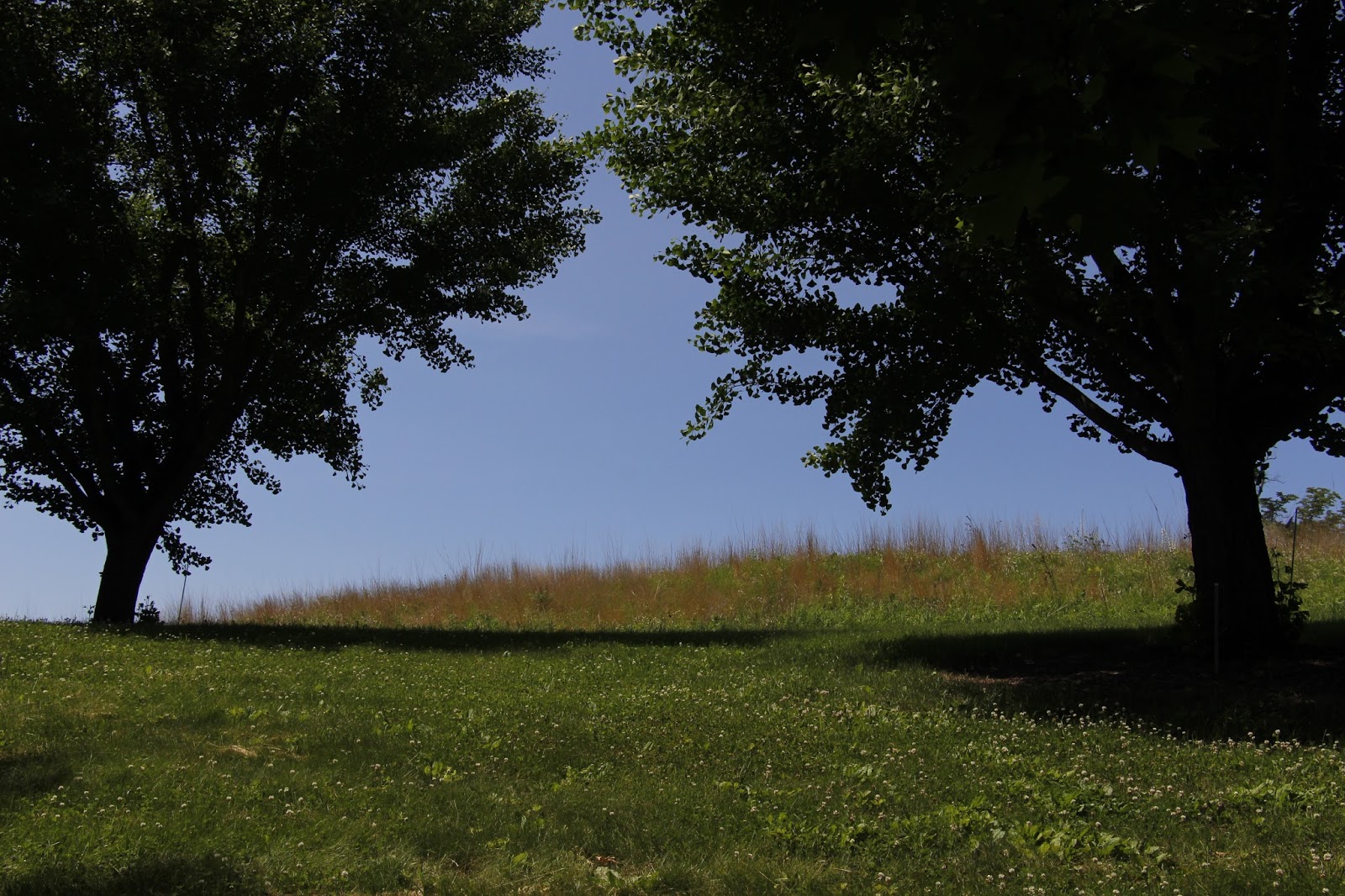
Today is the winter solstice, that time when the Northern hemisphere experiences the longest night and the shortest day of the year. Our shadows stretch out before us like spider-limbed adventurers and we shiver during the brief light and long night as we wait for the dawn. In the darkness we can gaze up at the night sky and search for our own shimmer in the sea of stars; we require the dark to see the vastness and the beauty that surrounds us.

I love this time of year. I struggle with it as well, because the external dark leads me into my own darkness, but the deep quiet and long-lasting starry skies give me a chance to think, to dream, to ask myself honest questions and to find new stories that the light might have chased away. This time of year draws me closer to the ones I love as we huddle around whatever may pass for a fire and keep each other company so we don't feel alone in the dark. Recent studies suggest that language and human culture likely evolved in large part around the communal fire, that we went from communicating the technical details of how to stay alive to the deeper and more connecting material of stories and shared thought, the building blocks of culture and community, around that fire as we waited for a meal to cook and for the night to pass. As I look more deeply within myself, the dark and the fire remind me that I am not alone.

For as long as I've been living independently, I rise at dawn on the winter solstice (no hardship, dawn is late) and light a 24-hour candle to burn through the brief day and lengthy night, so the sun will find her way back in the morning. I write, often telling myself stories of my own darkness and survival. I tell others stories of light in the darkness so we may be reminded that we need both, and that even in the dark all is not lost. I consider how we must know our shadow to know ourselves. I watch the sunset and eventually find my way to sleep, where I try to take note of my dreams. Rhiannon is said to visit us on winter solstice night and gift those who can remember with prophetic dreams. I don't always remember nor do they always make sense, but I try.

Tomorrow I will wake up and thank the sun for returning. I will thank my little candle for her hard work of keeping light in the world. And I will return to my normal life, perhaps a little richer for the time spent considering the dark.

One last thing, a story of light in the darkness so you will remember you aren't alone, a story I can share with you so we are reminded of dark and light. May your solstice bring you stories, the treasures of the dark and the light, and may your own self be more deeply known.


(c)2016 Laura S. Packer Creative Commons License

Wednesday, December 14, 2016

The Telling Life: Creating set lists

December is an interesting month in this storyteller's life. Each year I am fortunate enough to be hired to tell "Christmas stories" and each year I have a moment or two of panic, thinking I don't know any Christmas stories! I do, of course, but I need to review and consider which stories I love, which I find trite, and which will work for a given audience. It is an ongoing exercise in creating an appropriate set list.

A few days ago I had a lovely gig telling Christmas stories for older adults. As I considered what to tell them I had to make my way along a fairly narrow path.

  • Stories appropriate for adults. 
  • Stories that honor the spirit of Christmas, even though I'm not Christian. 
  • Stories that won't make them uncomfortable and I knew this was a relatively conservative audience. 
  • Stories that will evoke their past and honor their present.
  • Stories they might not know. 
  • Stories I enjoy telling.

I pulled stories out of my repertoire and realized there were some holes. Because I was doing this work far enough in advance (thank goodness!) I had time to learn a few new short stories and add them into the set. At least one of those stories will likely become a permanent part of my repertoire (a story rarely becomes part of my permanent repertoire until I've told it several times).

I go through a similar process for most gigs. I realize this may seem time consuming, but it feels important to me. I do have set lists that generally don't change from performance to performance (Christmas story gigs, for example, are generally pulled from a set list that varies only slightly) but I want to make sure I am honoring this particular audience and doing my best to give them what they need based on who I understand them to be, every single time. Reviewing set lists also gives me a chance to find holes in my repertoire and add to it, as I did with this recent gig. From time to time I will wait until I'm in front of the audience before deciding what to tell, but that has become less frequent as I've become more confident in my abilities to tell the right stories most of the time.

I keep track of my set lists in the same program I use to track gigs, so I know I won't duplicate a set if I'm invited back by the same group. This is part of why I consider what stories to tell before every gig, I want to make sure I give them something new.

How do you select stories for a given gig? Do you have consistent set lists that don't really change or do you create new ones each time? Do you know what you're doing to tell before you get up on the stage or do you let the wind blow you where it will? I'd love to know!

(c)2016 Laura S. Packer Creative Commons License

Wednesday, November 23, 2016

The Telling Life: The storyteller gives thanks

I try to practice gratitude every day. I've written about it here before but, even with it being part of my daily life, it isn't always easy. I get distracted by the same things we all get distracted by - money and politics and petty jealousies and so on. I'm sure you experience many of the same distractions I do. Yet when I remember to be mindful about gratitude, whether it's writing lists or making sure that I thank people  or something else - it changes my outlook.

This has actually been studied and we know that being consciously grateful can change our brains for the better. When we practice gratitude regularly it can decrease depression and anxiety, increase our levels of dopamine (this hormone rewards the brain and helps us move towards rewards) and the effects appear to be lasting. If this sounds surprisingly like the neurological effects of storytelling you wouldn't be wrong. Maybe when we practice gratitude regularly we are telling ourselves stories about the possibility of a better world which helps us move to make that world a reality. I don't know, but it seems like a nice idea.

In the spirit of the season and because I believe it's important every day, here are eleven things this storyteller is grateful for, specifically related to storytelling and its impact on my life.

  1. I am grateful for the sense of connection I feel when I tell or listen to stories. 
  2. I am grateful for the opportunity to tell at all. I would do so even were I not paid for it, but how fortunate I am that I can make my living this way. 
  3. I am grateful for every single person who has taken the time to listen to me.
  4. I am grateful for every single person who has hired me.
  5. I am grateful for artists of every stripe who have shared their work, so I may be inspired, intrigued, frustrated and moved. 
  6. I am grateful for those who have taken my workshops and believed I had something useful to say.
  7. I am grateful for those who trust me to coach them, what an honor!
  8. I am grateful for the stories themselves, that help me understand myself and the world more deeply.
  9. I am grateful to my teachers, those who have inspired me and believed in me, including my parents, my step-kids, Brother Blue, Ruth, Kevin, Charley and many, many more. If your name is not here please don't be hurt. I am grateful to you.
  10. I am grateful for the overheard moments, the books, the poems, the movement of the trees, the tastes, the everything that has inspired me to create.
  11. I am grateful for you, the listeners and readers, the people whose interest in what I have to say gives me the belief that maybe I have something worthwhile to say after all. Thank you. I could not do this without you. You have, quite literally, saved my life at times.
I fear this list may seem trite, or that I've overlooked something or someone terribly important, but it's a start. It's interesting to me, limiting this list to the impact of storytelling; there are many more things I am grateful for in general, but it was fun thinking storytelling specifically. What are you grateful for? What or who would you like to thank? I'd love to know. Let us give thanks, together. 


(c)2016 Laura S. Packer Creative Commons License

Wednesday, November 2, 2016

The Telling Life: Remembering the dead

My #tellinglife has had some strange moments in it. There was the time I told There's Always Room for One More to the passengers in a crowded airplane. And there was the time I told for a cannibis festival. Then there was the time at the nudist camp or the jailhouse wedding or... All of these were unusual gigs, but no less wonderful for their oddity. None of them, however, eclipse the times I've told stories at memorial services.

You already know that part of why I maintain this blog is to write about the death of my husband Kevin, grief, and life after death. That's not what I'm talking about in this post. Here I am talking about the role of the storyteller in remembering those who have died. It is part of our sacred work.

It has been my privilege to be invited to several funerals, where I told stories that the decedent loved or told stories about them. Each time it has been stirring and I was deeply honored that those who remained trusted me in that careful, painful moment.

The more I think about it, the more it makes sense. We remember those we love by telling their stories. It makes sense to have storytellers do this, so the mourning may grieve and remember without struggling for words. Some people call it speaking for the dead (derived from a book by Orson Scott Card, but not of the book). We sometimes need to hear these stories, these truths from someone else to make them more bearable.

Many Jews believe that no one has really died as long as they are remembered; living memory means the intangibles aren't yet lost. Their laugh. Their scent. The annoying little habits. We often come to understand those we have lost and our relationships with them more through those stories than we ever could while they were still alive. Hearing those stories in another's voice might help.

None of this is to say we shouldn't tell our own stories of those who have died. What I want to stress is that it's important to tell these stories. This is how we keep the dead alive in our hearts.

We are in the dark time of year now and Halloween has just passed. Now is when we explore the hidden stories, now is the time when we remember the dead. Don't be afraid to say their names. Don't be afraid to tell their stories.

I don't know if I will be asked to speak at another memorial service. In all honesty, I hope I am. I hope I can keep the memories of the dead alive through my voice, my memory and my stories. It is sacred work and work we all must do, so it will be done for us in turn.

(c)2016 Laura S. Packer Creative Commons License

Wednesday, October 26, 2016

The Telling Life: The things that scare us

It's that time of year again, when the air grows crisp (at least in the Northern hemisphere) and storytellers everywhere celebrate the arrival of Halloween, when most of us have gigs aplenty. This is the season for scary stories, after all.

I love October and Halloween. When I was a child the double whammy of costumes, candy and my birthday (which falls toward the end of the month) was enough to make me giddy. Now it's the crispness in the air, the long shadows of an autumn evening, the firework leaves. And yes, my birthday still plays a part in how much I love the season.

Halloween, as you well know, is not just a celebration of kids in cute costumes and the candy industry. It's traditionally a time when the boundaries between the worlds are at their thinnest, a time when things from the other side can more easily reach through. Whether these things are to be feared or not depends on your own particular relationship with death, the afterlife and the otherworldly.

Personally, I love the suggestion that those I love who have died might be able to more easily reach out and say hello. I set out gifts and snacks for them on Halloween night (along with the candy I give to the creatures who ring my doorbell). But I can't escape the darker aspects of the season, the sense of the other that might be lurking around the corner. This time of year gives me a chance to look at what frightens me, to ask why and maybe even embrace it. If I'm to tell effective scary stories I need to be willing to look into the dark. This is part of the storyteller's job, after all, to look into the shadows and let the audience glimpse what might lie beyond, but from the safety of their seats. (There is a whole other discussion here about making sure your scary stories are appropriate to the listeners. For this piece, I'm assuming you really do want to give them a chill.)

Part of the storyteller's work is asking not only what will scare the audience, but what might scare us. This is a more focused version of our work across the board - we need to understand why a particular story calls to us as we call to the audience.

So what scares you? What kinds of stories might you tell that you find chilling and why? If you love the stories you tell and understand why you can't help but tell them more effectively. If you get a shiver from a tale you are much more likely to be able to share that with your audience.

Settle in. Dim the lights. Close your eyes and let your hackles rise as something... anything... reaches out from the dark. Reaching for you.

(c)2016 Laura S. Packer Creative Commons License

Wednesday, September 28, 2016

The Telling Life: Nourishment

I am writing this from the Maine coast. It is a stunning day, crisp and bright, the water smiling the sun back at me. Yesterday I read an entire book in one day (something I used to do regularly but not in years) all while curled up by the fire. I am actually taking a break from my usual work life, which is wonderful but still work.

It's very hard for me, as a self-employed person, to take a break. I know whenever I take a break it means there are opportunities I will miss, even as I believe that more will come. My work is what drives me. I work all the time, even here on vacation. You'll note this is a new blog post, not the old one I was thinking I would repost. Yet breaks are important. We need to nourish ourselves and sometimes that means taking a break. I need to recharge by letting the sound of the wind and waves fill me.

We need to rest. Being here in Maine is nourishing for me. I am recharging my batteries on all levels, physical, emotional, creative and spiritual. By giving myself a break I am likely to be much more creative and energetic when I return home.

How do you nourish yourself? How do you give yourself permission to set down the pen or the phone and just rest?

I'm going back out to the deck now. The trees and water are calling.

(c)2016 Laura S. Packer Creative Commons License

Wednesday, September 21, 2016

The Telling Life: Our own fairy tale

If you've spent more than five minutes with me, you know I love fairy tales. If you've read my writing or been to a performance, it pretty quickly becomes clear that my work is influenced by these magical, whimsical, terrifying stories. Heck, beyond my work, my whole life is influenced by them.

It's easy to think that the appeal lies in the justice for the wicked and the hazy happiness at the end of many fairy tales. The evil are usually punished and the heroic live lives of happiness to the end of their days in some far distant future. When I was little that was certainly part of the appeal, but now I wonder just what happily ever after means.

I thought Kevin and I would live happily ever after, working and loving one another until some time when we might slip away, holding hands, both wrinkled and grey. I was wrong. That wasn't our happily every after. We were living it all along but just didn't know it; ever after was far too soon. There was no just punishment of the wicked; cancer can't be punished. Our story stopped short and I am left with forging ahead, finding a new kind of happiness, a different ever after.

So if it isn't happily ever after that I live in then perhaps it's once upon a time. 

I love the idea of once upon a time, of a time out of time. I like those kinds of liminal spaces, neither here nor there. I sometimes feel as though that's where I live, neither of this world nor removed from it, but somewhere between. Once upon a time captures this rather nicely.

I experience once upon a time when I am in the woods. When I am meditating. When I am particularly engaged and happy with what I'm doing. Maybe for me once upon a time is actually flow state. Maybe it's something else.

Or maybe it's all of it at once. Maybe we are living fairy tale lives even in the midst of traffic lights and collection notices and stomach aches and demanding bosses.

If we remember that we live our lives in a simultaneous state of once upon a time (that place where we are most ourselves, where possibility lingers) and happily ever after (the knowledge that this moment, this life is as glorious and eternal as a breath or as dark and fragmented as a hand gone slack) then maybe we can find that still place where everything is possible. The moment when the hero hasn't yet taken up the quest but knows they will. Where fairies don't need to grant wishes. Where we are the princesses and poor boys, the old women by the side of the road and the magical cat. Where we can lift ourselves up and make our own best story.

(c)2016 Laura S. Packer Creative Commons License

Wednesday, September 7, 2016

The Telling Life: Quiet reconsidered

Today I am recycling a post from 2013, with a few tweaks.

As you know, 2016 has seen me on the road and away from home more than not. Through trial by fire, I'm learning what I need to feed myself creatively when I'm away from my usual resources. One of the most important, and one of the hardest to find, is quiet.

I have a great need for quiet in my life if I am to be creative. I need time and space around me within which I can think or not think. Time when I let my mind wander. It's a funny thing, knowing that day dreaming is part of my job and for that part to be effective I need quiet. I certainly need to be heard, need to talk and think things through with friends, but quiet is where it all starts.

That quiet that works for me can actually be quite noisy. It could be the rumble of a coffee shop, the crash-and-hiss of the ocean, the wind in trees... any kind of white noise works as well as quiet and sometimes even better. I have several apps that create white noise, including the sounds of being in a cafe. Going for a walk is another kind of quiet that supports creativity; I find the physical motion helps loosen up my mind. What doesn't support my creative process is interruption, directed noise or voices I need to attend to.

I don't work well if the music around me is in English, for example. I don't have day dreaming room if I don't have some physical room, crowded environments are hard for me.

It's important that we figure out what kind of environments support our creativity. I know I need quiet, I need blocks of time, I need good light and a comfortable place to curl up. What do you need? What fosters and supports your creativity?

If you are in the position of helping others be creative, what do they need? Do cubicles and florescent lights really support their creativity? What might help? How can you help them alter their environment so they can find their own sparks?

Put some thought into your environment. Find the quiet and space you need to listen to the still, small voice inside. You might be surprised by what it has to say.

(c)2016 Laura S. Packer Creative Commons License

Wednesday, August 31, 2016

The Telling Life: Imposter syndrome

This post is an expansion on some of the ideas I first wrote about here. Some content is being repurposed.

Wikipedia describes imposter syndrome as:
Impostor syndrome...refers to high-achieving individuals an inability to internalize their accomplishments and a persistent fear of being exposed as a "fraud". Despite external evidence of their competence, those exhibiting the syndrome remain convinced that they are frauds and do not deserve the success they have achieved. Proof of success is dismissed as luck, timing, or as a result of deceiving others into thinking they are more intelligent and competent than they believe themselves to be.

Oh, I question myself constantly. I wonder if I have any right to do what I do, let alone try to help people. I routinely feel as though I am not as smart, not as capable and not as talented as other people tell me I am. I ask myself questions like:
  • Why would anyone want to hear my stories?
  • This stuff is easy. And fun. Why would anyone bother to hire me to do it?
  • I don't really have anything worthwhile to offer, what makes me think I have any right to teach this stuff?
  • How dare I send a newsletter to people who signed up for one? Do I really have anything to say?
  • What right do I have to do this work?
When my self-doubt becomes too loud and I struggle to believe I deserve this life and work, if I'm lucky and smart, I do several things. 
  • I get away from the work for a little while, taking a little walk or do something else for a few minutes. 
  • I might ask a friend to tell me something to counteract the fear. That's where this all comes from, for me anyway, a fear that all of the poor messages I've received are right. Or even worse, that I do deserve this but am not living up to the gift.
  • And I ask myself questions, things like:
    • Can you remember one single time your work seemed to make a difference for someone? (yes)
    • It's easy and fun for me. Is it that way for everyone? (Probably not) 
    • Okay, so maybe you're making it up as you go along. Does that make it less useful? (not usually)
    • Why are you running yourself down like this, is it about something else? (often) So what can you do about that other thing?
    • Whose voice is it that's doubting you? Is it my own? Is it someone who should have held me up but didn't? Is it social pressure? Whose voice really matters?
    • Would I think someone else who knows what I know is good at what they do? So why think I not good at it?
You get the idea.

I'm telling you this NOT so you will reassure me, but because I'm betting some of you question your own artistic worth from time to time. I'm sure I'm not the only one. I know I can't stop you, I struggle to stop myself, but I remind you, your voice matters. Your work matters. Please don't quit. Ask yourself the right questions and then? Get back to work. The world needs you.

(c)2016 Laura S. Packer

Creative Commons License

Wednesday, August 24, 2016

The Telling Life: Storytelling as an act of service

It can be hard to define what we do, those of us who make our living as storytellers. It's easy to think of our work as any number of things. It can be an art, a mystical moment, a craft accessible to all, something obtainable only after years of practice, on and on and on. If we're not careful we can push ourselves to rarified and undeserved heights. When I need to burst my own bubble and come back to earth I remind myself that what I do is provide a service.

I make my living as a storyteller. I perform, teach, coach, train and consult, all under the umbrella of the word storytelling. I provide services to my clients and I do my best to make sure those services are nothing less than exemplary.

Let's dig a little into what service is and why it's a handy way to think about this kind of work.

First, it is a service. I offer intangible products to my clients, be they an audience, someone working on their own story, a business or non-profit that wants to use storytelling more effectively or a group of people I am training. While I might want to think of myself only as an artist, what I am paid for are services.

Businessdictionary.com defines services as: Intangible products such as accounting, banking, cleaning, consultancy, education, insurance, expertise, medical treatment, or transportation.
Sometimes services are difficult to identify because they are closely associated with a good; such as the combination of a diagnosis with the administration of a medicine. No transfer of possession or ownership takes place when services are sold, and they (1) cannot be stored or transported, (2) are instantly perishable, and (3) come into existence at the time they are bought and consumed.

That seems like a pretty good description of performance storytelling. My stories do not transfer possession when I tell them. While they can be stored should I record them, the expertise, craft and talent cannot be handed over by some kind of mind-meld. In a performance setting, stories are instantly perishable - they exist in that moment between the teller and a particular audience - and they come into existence as they are purchased and consumed. This definition stretches to cover coaching, consulting and training as well. They are intangible, perishable and momentary. The effects may (and I hope do) linger long after I've gone, but the experience itself is fleeting.

It may be uncomfortable to think of our work this way, as a service. It might feel too business-y, clinical or materialistic, but I find it makes me work harder and serve better if I remember that my clients deserve the best and, because it is a fleeting service, I have an obligation to work as hard as I can for them in my preparation and in the moment so the aftereffects will linger. They are paying for an enduring memory or lesson learned as much as anything.

I also strive to think of my work as this kind of service, as defined by dictionary.com: service (noun) an act of helpful activity; help; aid: to do someone a service. 

Looked at this way I remember that I never know the impact of the work I do. I don't know who I have helped, I know only that I may have been of service. I have been fortunate enough to have people tell me that my work - whether it's a performed story, coaching or consulting - has lingering effects. That I have helped them. Knowing that this can happen helps me work harder and strive to be better in the moment.

Lastly, every once in awhile I have an experience that reminds me that storytelling can be another kind of service: a form followed in worship or in a religious ceremony or a meeting for worship —often used in plural .

At its very best, storytelling can play the role of communal service. A group of people gather together in search of a common feeling and create something momentary and sacred. My best moments as a performer, listener, coach and consultant all have elements of the sacred about them because they connect me to my audience and to something beyond. Collectively we create a moment that will not soon be forgotten.

When I remember that I provide a service it doesn't lessen the power of what I do. I don't minimize my artistic effort, craft and talent. I don't feel as though I commoditize my work. What I do is remind myself that I am on this planet to be of service. I am fortunate that the service I provide is one that serves me, too; knowing that helps me work harder, dig deeper, offer more and serve better. 

It is a privilege to serve the world, my audiences, my readers and you. Thank you.

(c)2016 Laura S. Packer Creative Commons License

Wednesday, August 10, 2016

The Telling Life: Does size matter?

I am in the middle of a run at the Minnesota Fringe Festival. I'm telling The Adventures of Crazy Jane and Red Haired Annie, stories I dearly love, stories I know listeners usually enjoy, but my audiences are small; I'm in a hundred-seat theater and am filling no more than a quarter of the seats.

Fringe festivals are funny things. There are hundreds of performances, often selected by lottery, and the artists must do their own marketing beyond the basic stuff provided by the festival. It's hard work and can be grueling. It helps to have a local following or something that's easily described, and here I have neither. So my audiences have been small.

This has me thinking about quantity vs. quality of audience. It's easy to see value in a large audience, knowing I have drawn a whole bunch of people to my show. It can be harder to see value in smaller but still deeply appreciative audiences, because the immediate visual hit of fewer people in the room is unsettling.

I am reminding myself of what Brother Blue used to say, the room is full of angels. He's right, of course. Regardless of the size of the audience, if they are present, interested and engaged, then they are a good audience. Sure, it helps when there are more people, there is something about a critical mass that helps good storytelling become better, but the key is the connection between teller and listener, be that one child utterly entranced by a story, ten adults having a really good time or a couple hundred each in their own shared moment. It's about remembering that every individual audience member has chosen to be there and I am honoring their presence by doing the best I can.

So yes, I'd be lying if I said size doesn't matter, of course it feels good playing to sold out rooms, but as it is with most things in the world, it's what you do with it that really makes the difference.

(c)2016 Laura S. Packer Creative Commons License

Wednesday, August 3, 2016

The Telling Life: Inadvertent vacation

Oops. Apparently I needed a break. I know, one of the cardinal rules of blogging is don't apologize when you don't blog, so I'm not apologizing, but I am acknowledging. I kind of fell off the map.

This is part of the #tellinglife, and so my topic for my return to these pages. It's important to recognize when you need a break and to take one deliberately, instead of inadvertently, as I just did.

I love being self-employed. It's sometimes nerve-wracking, like when I don't have much work lined up; other times it's exhausting. It is never boring. I am always working, which is a common observation amongst the self-employed. I need to remember to watch for signs of burn-out, so I can plan my vacations and breaks rather than take them unexpectedly, as I just did with this blog.

Some of my signs of impending burnout are:

  1. Dropping balls. More than usual anyway. I stop tracking my tasks with as much diligence and let myself fall behind.
  2. Irritation. Boy, can I get cranky.
  3. Getting sick. I'm recovering now from a pretty powerful summer cold. If I don't take a break when I need it my body will eventually force me to.
What are your signs of needing a break? How do you manage vacation time when it's hard to stop working? What constitutes vacation anyway? I'd love to know your thoughts and, in the meantime, I'm climbing back onto the blogging horse. It's nice to be back in the saddle again.


(c)2016 Laura S. Packer Creative Commons License

Wednesday, July 13, 2016

The Telling Life: So, what do you think?

I've been writing The Telling Life for over a year now with a few brief breaks. My intent from the start has been to look at the intersection between art and life, thinking about how being a storyteller impacts my daily life and vice versa.

I'd love to know what you think. Are these columns interesting? Useful? Should I keep doing it or go on to something else? Do you have questions or topics you'd like me to address?

I'd love your input. I'm beginning to run dry on topics and would love to know what you would like to read. Thanks!

(c)2016 Laura S. Packer Creative Commons License

Wednesday, June 29, 2016

The Telling Life: Expect wonders

I sometimes struggle to find inspiration for anything. For writing, for stories, for cleaning the kitchen, for getting out of the house. I bet you do, too. Wonder, I have found, is an excellent antidote to the struggle. This may very well not work if you're in the throes of depression (I've been there, so I know), but if you're just feeling as though there will never be anything inspiring ever again and you want to sulk, open yourself up to wonder. Maybe the universe will come through this time. It often does for me.

Wonder is everywhere. I'm not talking about the BIG awe-inspiring wonders, like Niagara Falls or the birth of a baby, but the things we will see if we are willing to take some time to look.

I went for a walk in the Minnesota Landscape Arboretum with my sweetheart a few weeks ago. It was a hot, bright day, the air clinging to our skin and clothing. The arboretum has many different landscapes you can explore, all lovely and all full of wonder. There are sculpted gardens, rosebeds, woodland, marshes and more.

At first I saw the big things.

(c) 2016 Laura Packer DO NOT REPRODUCE WITHOUT PERMISSION

(c) 2016 Laura Packer DO NOT REPRODUCE WITHOUT PERMISSION
 (c) 2016 Laura Packer DO NOT REPRODUCE WITHOUT PERMISSION

Then I began to see details.

(c) 2016 Laura Packer DO NOT REPRODUCE WITHOUT PERMISSION

(c) 2016 Laura Packer DO NOT REPRODUCE WITHOUT PERMISSION

(c) 2016 Laura Packer DO NOT REPRODUCE WITHOUT PERMISSION

(c) 2016 Laura Packer DO NOT REPRODUCE WITHOUT PERMISSION

And soon enough the world exploded into wonder.

(c) 2016 Laura Packer DO NOT REPRODUCE WITHOUT PERMISSION

(c) 2016 Laura Packer DO NOT REPRODUCE WITHOUT PERMISSION

(c) 2016 Laura Packer DO NOT REPRODUCE WITHOUT PERMISSION

(c) 2016 Laura Packer DO NOT REPRODUCE WITHOUT PERMISSION

Wonder is there if we look for it. You needn't be in an arboretum or any other special place, you just need to be willing to let it in. It's in the cracks in the sidewalk, the slip of paper left in an old book, the expression on a stranger's face, the arc of the clouds across the sky. It is big and it is little. It is in our pores and in the air we breath.

When we are open to wonder, we are open to the world and much more able to make something of it.

What wonder have you found lately?

(c)2016 Laura S. Packer Creative Commons License

Wednesday, June 22, 2016

The Telling Life: Ten tips for the road weary storyteller and others

You may have noticed I've not been posting quite as regularly lately. This is because I've been working a lot, which is great. Most of the work hasn't been near my home and has included very long hours, which is fine, but takes some management. I'm learning a lot about self-care, energy management and efficient packing so I thought I'd share. I'd love to know your favorite road-warrior tips! Please add them in the comments so others can benefit.
  1. TSA-PreCheck. I know, you're thinking this is a waste of money. It's not. Airport security lines are just getting longer and the $85 I spent on my Known Traveler Number has saved me hundreds of hours in line. I can be pretty confident that arriving an hour ahead of time is enough and I won't miss my flight; if you don't have TSA-PreCheck that's no longer a guarantee.
    If you're concerned about the government having your fingerprint or running a background check, that's another matter. You have to follow your conscience.  
  2. Money vs. time. It's always a trade-off. TSA-PreCheck, for example, is an excellent example where the cost per hour of the clearance is likely quite low for me. I expect the $85 spread out over the time it has saved me is barely $1/hour. My time is worth more than that. Likewise, when I park at the airport I use the lot where they pick me up and drop me off at my car. It's .50 more/day when I use a coupon and this way I don't have to wait for up to 30 minutes for a shuttle. Other things aren't worth it, but I always make sure I consider the trade-off between time and money when I can.  
  3. The right bags. I travel with two bags, my laptop backpack and my carry-on duffel. I use a duffel rather than a roller because I can get almost as much in it and it almost always fits in the overhead section, so I don't have to gate-check it. My duffel can carry about a week's worth of clothing along with all my toiletries and other sundries. Admittedly, I don't wear clean trousers every day, but it works. I'm currently using this bag because, if I want to bring my camera instead of my laptop bag, it's equipped for it. 
  4. Effective packing. My duffel wouldn't work if I didn't pack effectively. For one, I roll things instead of folding them. This takes up less room. For another, I make choices about what I can wear more than once (come on, you do this, too). I also make sure I'm wearing comfortable shoes for the travel days and pack only one other pair for work purposes. I also have a toiletries baggie that I leave packed and in the duffel. 
  5. E-readers and other technology. You can carry hundreds of books if you have an e-reader. Yes, I prefer paper books, but this technology has been life-changing for thousands of travelers.
    Equally, I use a number of apps that make everything MUCH easier. TripIt is amazing.
  6. Important info. I keep all kinds of important info in a notes program on my phone. This includes airline and hotel contact numbers. I was on a flight that was significantly delayed. We sat on the tarmac for close to an hour before they told us we were going to deplane and would have to wait several hours for another plane. This meant I wouldn't be home until the next day. I was already tired and cranky. As soon as the announcement was made, while still on the airplane, I called the airline and was rebooked on a flight leaving in 45 minutes. If I didn't have that number handy I might not have called.
    I also upload copies of presentations, notes and handouts to Dropbox, so I have backup copies that aren't dependent on my technology. Sometimes I copy them to a thumb drive that I carry with me. Technology can fail so keep backups of important info. And you already back your computer up before you hit the road, right?
  7. Mobile office. I have a mobile office that lives in my laptop backpack. It includes pens, a notebook, chargers for everything I might carry, a mini-powerstrip, paper-clips and so on. It adds a little weight but has been incredibly helpful when I'm working on the road. I also carry a little bottle of hand-sanitizer attached to my bag so I am less likely to catch a cold while traveling. 
  8. Don't assume you'll remember everything. I keep lists, writing down even the most obvious of things. Right now, when I have only a day at home, my list includes things like: laundry, pack (with a sublist of what I'll need), blog, dishes, buy toothpaste. These are simple things that I'd like to think I could remember, but I know I have such a dense schedule, I don't want to wake up before my big meeting and find I've run out of toothpaste.
  9. Timing. Timing is everything. Give yourself enough time and make choices about what will get done. You may not have time for everything. Maybe you'll need to ask for help. This is where lists can come in handy!
  10. Sleeping and other habits. Just because you're on the road you don't have to lose all of your good habits. Try to eat well on the road. Stay hydrated. Get enough sleep. I carry a few binder clips in my duffel because often hotel blinds don't close quite all the way and the room can be bright. I sleep better in the dark. Do what you can to continue the same good habits that you have at home while you're on the road. A little thought can go a long way to staying healthy on the road and back home.
  11. Mindfulness, patience and wonder. Your bonus tip is one of the most important. Remember, things will get screwed up. The computer hook-up will fail, the flight will be cancelled, you'll forget something important at home. You have some control over how you react to these things. If you get angry and frustrated things will seem even worse. If you can take a deep breath and remain calm, you may find people are more likely to help you and, at a minimum, your blood pressure won't spike. Most service people (like gate agents, pilots, hotel clerks and so on) are doing the best they can. A smile and thank you can go a long way. By being mindful that we are all in this together, by practicing a little patience, your travel hiccups will at least be easier to bear.
    And don't forget, you're in a new place doing work you chose. Even if you don't have time to explore, enjoy the sound of regional speech. Ask your hosts about what they love. Chat with the people in the airport waiting next to you, they may have wonderful stories to share. Don't lose the wonder of being on the road and the road will hold you up.
I'd love to know what tips and tricks have worked for you. I hope this list is helpful as you hit the road for work and adventure!

(c)2016 Laura S. Packer Creative Commons License

Wednesday, June 8, 2016

The Telling Life: I am privileged

Caveat: I've been struggling with this post for awhile so am publishing it to get it out of my head. It's rambling and repetitive, I know. I'm throwing ideas at the wall and seeing what sticks.

Not long ago I declared an interest in writing a post about storytelling and privilege. That was dumb. This whole issue has me stuck in a mire of frustration and uncertainty, so I'm writing this post to get it out of my system. I have no answers, only questions and a reminder to admit my own good luck and circumstance.

I've gone around and around about what I want to say. I came up with sweeping generalizations, some scathing indictments of a culture that doesn't value arts adequately, pointed observations about how privilege hurts our art yet some of us profit from it. I had hours of conversations about privilege. I was told I should write about white privilege, economic privilege, cultural privilege and more.

My head was spinning and I got lost. This is such a big topic and so pervasive, I found I had too much to say and became mute.

What I can write about is my own, personal experience with privilege and my response to it. Perhaps some of you will feel a resonance with it and might be moved to think about privilege in your own artistic lives (or lives in general). If you're wondering if you might be privileged here is a quiz you can take.

Let me start with the following admission: I am living a life of incredible privilege. I am a white, middle-class woman whose appearance falls within ordinary parameters. I am mostly able-bodied and able-minded. When I decided to leap into self-employment I spent two years building savings specifically for a safety net AND I had a spouse who was willing to support me while I got the business up and running. When he died I still had an economic safety net, so I was able to make the choice to continue self-employment.

I am very lucky.

I feel as though I can only write about privilege in personal terms though it's a global issue. I hope that by acknowledging it, I become more aware of it on a routine basis and so will more readily extend a hand up to those what may not have my arbitrary advantages. I hope that my understanding of it will be sharpened and I can more readily monitor my own responses and be aware of those times when I get something not because I deserve it but because of my status. I hope that I remember my obligation to open those same doors for others. None of this means I feel particularly guilty about having these privileges, I don't see the point in that. What it does mean is I think I have an obligation to acknowledge it and to use it for the greater good.

I am absolutely certain there are gifted artists who do not have the option to devote themselves to their art. They create in the interstices, time stolen from their jobs or their families. I wish we lived in a world that would permit them more latitude. All I can do is support their work when I encounter it and try to create opportunity for them. I am also certain there are gifted artists who do not want to pursue art full-time and that's fine. Wallace Stevens maintained his insurance career while writing poetry that changed American literature. He wanted the security and social network a job provides. There is nothing wrong with that.

Storytelling is a universal art. If you are human, you tell stories. Yet when I look at career storytellers and those who are up-and-coming I don't see an even representation of my larger community. I am not an even representation of it. I try to counter it by being aware, by promoting and mentoring tellers who do not have the same privilege I do. I fail often. I try again.

I am writing this because I don't have answers. I don't know what to do about it, because it seems as though the ideal solution involves systemic change I don't know how to create (though I hope my small actions have ripples). All I can do is ask the questions and make the best, most informed choices I can.

I am incredibly lucky. I certainly have to make careful decisions but I am building the life I want through hard work, tremendous support and privilege. Economic, racial, cultural, sexual and more.

I am writing all of this because I am struggling with the idea of privilege and living the creative life. I don't believe starving artists are the only kind of legitimate artist - frankly I wish that stereotype wasn't ongoing and sometimes accurate - but I do believe many of us who are able to live this creative life are doing so from a place of privilege. We have a responsibility to at least acknowledge it then to try to make it possible for those less fortunate to experience the same opportunities. It's so often about access to opportunity; those who are less privileged may not hear of opportunities or may not have the resources to reach for them. I don't see the point in railing about a skewed cultural value of art and artists though I do believe our society has some misplaced visions of worth and payment. Mostly I believe I can make a difference by naming my own privilege, by trying to change systemic bias, by offering a hand when I can, by being grateful for what I have, and by continuing to ask difficult questions.

I don't have solutions for any of these questions but they are worth asking. I think we all deserve a chance to shine. I'd love to know how you think about privilege in general and in storytelling in particular.

(c)2016 Laura S. Packer Creative Commons License

Wednesday, May 25, 2016

The Telling Life: Take a week off

Hey everyone, I'm taking a week off from writing a #tellinglife post. I'm working on a post for next week that tackles some big issues and I need more time to think about it.

In the meantime, I'd love to hear from you. What stories are you loving these days? Have you had any adventures in the #tellinglife? Are you looking forward to summer or building a dark, airconditioned bunker? How are you?

Thanks for understanding. Stay tuned next week for thoughts on privilege, creativity and life.

(c)2016 Laura S. Packer Creative Commons License

Wednesday, May 18, 2016

The Telling Life: Technical storytelling

Last week I had the honor of presenting a storytelling workshop to a group of IT executives. It was great. I love working with technical people on storytelling because they are so good at it. I expect there is something deeply liberating in the permission to be human and connected in a technical context. Technology, after all, is part of what it is to be human; we've been using tools (and tools are technology) since we first picked up a rock.

We need to be able to talk about technology in understandable ways and storytelling, of course, makes the technical accessible. People who work in technology are still people and so want to know that their work has positive impact or want to learn from their mistakes. Stories are a great way to do both.

I asked the group to work on stories of a time when their organization overcame adversity. This meant that they were working on stories about when they overcame adversity, solved problems and made things better, just in the context of work. I loved watching them.

The first time around several people seemed to feel awkward. This makes sense, how often do we have a chance to tell a story of our own success without judgement or apology? By the last time they told their stories I could see people sitting up straighter. Their voices were lighter. They were more connected with one another. They were more aware of the human impact of the work they do every day.

Yes, they were telling technical stories, some of which were highly detailed and well beyond my understanding, but they were all stories of overcoming obstacles and helping people. They were all stories of human understanding, teamwork and achievement.

It's easy to think that the technology we use every day - whether it's a computer, a car, a hammer or a phone - has no emotional weight, but that's a lie. How often have you felt frustrated because your computer, car, hammer or phone didn't work the way you had hoped? When we let the technology of our lives be part of our stories it becomes easier to understand and perhaps easier to be patient with because we are reminded that this is another kind of story we all share. I was late because my car wouldn't start is a simple story we all can relate to because we all have experienced it. What if we add in the stories of connection such as I fell in love with someone I met online or I used my grandfather's hammer to build my home or My team solved a software problem for a program that's used by thousands worldwide.

Everything we do is part of being human because it can't not be. And humans use story and technology every day. Like everything else, when we tell stories about technology, about success and failure, we allow our humanity to permeate everything and we become more connected with other people through that shared experience. Let your computer, car, hammer and phone become stories.

(c)2016 Laura S. Packer Creative Commons License

Wednesday, May 11, 2016

The Telling Life: I am the wicked queen, the cursing fairy

I feel as though I should be writing this post in a tiny font or some other way of indicating a secret, a shame. I know what I’m about to say is no different from anything most of us feel, but we don’t talk about it, and I think that can have an impact on our work and our confidence in our abilities. It certainly undermines my sense of my own value as a storyteller, an artist and a human being. 

Here goes.

I love the villains in fairy tales. I know they can be truly awful and rarely do they actually learn a lesson - really it’s more about punishment - but they are so human. They are often the only characters who behave in understandable, if wicked, ways. They experience something that hurts. They lash out. 


There are days when I am the Wicked Queen from Snow White. I look in my mirror and see myself as old, outdated. I am in that odd generational gap commonly known as Gen X, sandwiched between the Baby Boomers and Millennials. When I began storytelling I was the baby in the room and when I tried to do new, innovative things (personal stories about sex, revamping fairy tales in experimental ways, judged storytelling events and so on) there was always someone telling me I was pushing too hard and no one would want that kind of stuff. 

Now that kind of stuff is all the rage. 

I now often hear stories and see performances that are similar to what I was trying to do 15 years ago; I truly celebrate that our art has grown so much and that there is room for more diverse visions of what storytelling is. Even in my celebration, every once in awhile that hurt part of me thinks what about me? I was doing that way back when and no one cared. I still do it. I still push boundaries. Does anyone care? I'm not the young generation now, does anyone want innovation from me? I stifle those voices and carry on. They help no one. I'd rather keep doing new work and supporting other tellers, but those voices are there. While I don't lash out, I do get jealous. 

There are days when I am the cursing fairy from Sleeping Beauty. I feel left out and so am less generous. I am the old woman in the road who offers spurned gifts. I am the giant who really just wants to be left alone. I am all of these villains some days. 

We don't have a community understanding of this kind of stuff. The storytelling community is amazing but still quite young, so we don't have a way to express these feelings in safe ways. We also live in a culture that doesn't support artists more generally, so there is little conversation about all the ways being an artist is also all the ways we are human, with good and bad feelings. I don't always know what to do with these emotions and I certainly don't feel safe expressing them. This post is terrifying me, I'm afraid to click publish. I'm afraid that by naming it I will lose work, I will not be considered for other gigs, or people - you, my colleagues whom I love and respect - will think less of me. I'm afraid I will be punished as all fairy tale villains are because I'm not supposed to feel this way, right?

What really matters, of course, is what I do with these feelings. Most of the time I acknowledge them and move on. If it's a particularly bad day I might call a friend and rant for awhile, then put on my big girl pants and try again. I do my best to not act on these feelings, to not become the wicked queen, even if I understand her more now than I ever thought I could when I was 25. I like to think it's the action (or lack thereof) that matters. All I can do is keep doing the best work I can and be as generous as I can be, regardless of some of my less noble feelings.

Who does it hurt? If I don't act on it and do my best to remain a supportive member of the community, then I hurt no one, right? Wrong. I hurt myself because I begin to doubt my own abilities, talent and voice. I hurt others because, if I feel obsolete, I am less likely to seek out performances and teaching opportunities, so I remove my voice from the world. And my voice matters, just as much as yours does, just as much as the newest storyteller who hasn't yet heard a broad range of performances so thinks all their ideas are new.

I know I'm not alone in this, but so rarely do I talk about it with anyone. I have two colleagues who has expressed similar feelings to me, and I am grateful because I know I'm not the only one who feels petty jealousy sometimes. Surely there are more than just the three of us?

I know I'm not the only storyteller artist human being to feel this way. The old stories tell me that, because there are so many characters who struggle with feeling left behind or worthless. But the old stories don't offer me a roadmap of a way out of these feelings; they tell me only that acting on them is evil. I remind myself that I still have worth even if I feel petty things. I do my best to not stifle others as I was stifled. I work to remain generous with my time, my mentorship, my leadership, my talent. But some days it's not easy and all I want is to have my mirror tell me that yes, I am still fair.

What do you do when you feel jealous, frustrated, and ashamed of having those feelings? Am I the only one?

(c)2016 Laura S. Packer Creative Commons License

Wednesday, May 4, 2016

The Telling Life: Teach what you know

I had the pleasure of attending the Northlands Storytelling Conference this past weekend. It was a joy. A bunch of people who love storytelling, gathered to tell, listen, talk, teach and encourage one another.

I presented a workshop called Storying Our Grief about using storytelling to process grief and then to help others. This is one of many workshops I teach on a wide variety of topics, a sampling of which you can see here, but it was by far one of the most challenging I have ever taught.

I struggled for months with imposter syndrome about this workshop. What right do I have to talk about grief and loss? I'm not a therapist, is this too dangerous a can of worms to open? Will anyone want to come? For that matter, do I know enough about storytelling to teach anything about it? My inner demons were alive and well as I worked on this one. It was rough.

I persevered. I kept working on it. Each time the negative thoughts got too loud I would counter them as best as I could.

  • What right do I have to talk about grief and loss? Well, I've experienced a significant loss. While each grief is different there are similarities too, and I can at least help remind people that we are not alone in our loss. 
  • I'm not a therapist, is this too dangerous a can of worms to open? True, I'm not a therapist. But I've attended and led risky workshops before and as long as I am clear about purpose and intention (remind everyone that this is not therapy but storytelling) I should be okay. Have some tissues on hand. Have a good strategy planned for help in case someone gets really upset.
  • Will anyone want to come? I can't control that. All I can do is offer something I believe to be worthwhile. 
  • For that matter, do I know enough about storytelling to teach anything about it? Oh, shut up. I've been doing this for 20+ years, I probably know a thing or two.

It went really well. I had maybe 20 people in the workshop, they all seemed to get something out of it, no one fell apart in a significant way and yet they all got to feel what they needed to feel. I learned more about how to facilitate a group, how to help people process, how to tell stories.

I was thinking about it afterwards and remembered that 1) I can't teach what I don't know and 2) every time I teach I learn something new. I do know something about storytelling. I do know something about grief. I would never have wanted this knowledge, this understanding of deep grief, but now that I have it, I may as well do something with it to try to make the world a more whole place. The rewards are huge.

Every time I teach I am sharing myself and my experience. I love it. I love seeing my students have their a-ha moments. I love everything I learn every time I teach. I love knowing that my offering will help them be more fully themselves and better storytellers to boot; it helps me in the same way. I hope that we all can come to a place where we recognize that we have something to offer, that our experiences give us something worth sharing, that we all get to be both teachers and students.

P.S. As always, I'd love to know what you think. And if you're interested in bringing me in to teach, let's talk!

(c)2016 Laura S. Packer Creative Commons License
True Stories, Honest Lies by Laura S. Packer is licensed under a Creative Commons Attribution-Noncommercial-No Derivative Works 3.0 United States License.
Based on a work at www.truestorieshonestlies.blogspot.com.
Permissions beyond the scope of this license may be available at http://www.laurapacker.com.
Related Posts with Thumbnails