Showing posts with label art. Show all posts

Monday, January 12, 2015

Some thoughts on The Babadook

Last night a friend and I saw the new Australian film The Babadook. For those of you who haven't heard about it, it's about a woman and her son confronting a terrifying monster that appears in the initial guise of a book. It's really about more and is more meaningful than the usual trope of mother-protecting-child-from-monster. Much more. Perhaps an expanded blurb might give you a hint (don't worry, this contains nothing more than the IMDB blurb): A woman who has lost her husband struggles to protect her son from a monster in their house.

I was nervous about seeing it. I get scared by scary movies, so the thought of seeing what was being touted as the most terrifying movie since (insert your scariest movie here) and then going home to an empty house had me edgy. This was compounded by the fact that the lead character's husband died. I didn't know how I would react but I knew I wanted to see it  (I like both the lead actress and the director, plus it's written and directed by a woman!). I saw it with a friend, in her home, with plenty of breaks and chat times. All of that was set up to dilute the fear factor. Thank goodness for Amazon streaming movies.

As it turns out, it had elements of transcendence in it. This horror film spoke to my current state more clearly than any other film I've seen since Kevin died. That's my favorite thing about genre work - when it's well done it acts as a metaphor for the human condition and allows us to examine things that might be too painful, raw or distressing to look at directly. That's exactly what this film did for me and, I suspect, others in similar positions.

And.... here there be spoilers. If you haven't seen it, want to and care about spoilers don't go any further. Here is the trailer to offer you some buffer space.


The Babadook uses conventional horror tropes (threatened child, widowed mother, magical book, madness or monsters, dark creepy house, etc) to tell a story of grief, madness and the possibility of redemption. The main character lost her husband in a car accident as they were on the way to the hospital for the birth of her son, now almost 7 years old. She has never gotten over this loss and is unable to care for herself, let alone her son. The movie depicts the real horror of loss and grief with stunning clarity.

I felt known as I watched this film. I felt as though the horror of my loss was understood. I felt as though my own babadook was being named.

It's a well-crafted film, too. The shots, lighting, composition, writing, directing and special effects all work. They all work in the service of describing what deep grief feels like, what it is to be haunted and driven.

I don't want to reveal the ending (that's too spoilery for even me) but the ending says more about how to live with grief than any other film I have seen. We must learn to love and accept it (because is it not a reflection of the love for the lost one?) as we must learn to love and accept our own dark sides. We must learn that we cannot make it go away, we can only make peace with it. We must learn that the monsters are real, but they may not be what we thought.

We must learn to live with the dark, in spite of it and alongside it. When it comes knocking we have no choice but to let it in. But we can choose what to do next and who we become.

(c)2015 Laura S. Packer Creative Commons License

Wednesday, May 18, 2011

Disappearing

I sometimes want to disappear, just vanish from this heady, complicated life. t turns out I'm not the only person who feels this way - I'm sure you have too at some point.

Photographer Alec Soth traveled America to interview and photograph hermits, monks, drop-outs and others who have shed the regular world. This journey resulted in a book and a documentary (trailer below).

So tell me, if you disappeared, who would you be?


(c)2011 Laura S. Packer Creative Commons License

Sunday, March 13, 2011

Assemblage: The luck beneath our feet

luck beneath our feet by laurapics
luck beneath our feet a photo by laurapics on Flickr.

I made this with found objects, items from a friend's mom's house, artificial grass and a brick background print, all in an Ikea shadowbox frame - it's about 6 inches square. I was aiming for a close up look at the things we pass by and overlook. I hope you like it.

(c)2011 Laura S. Packer Creative Commons License

Sunday, January 9, 2011

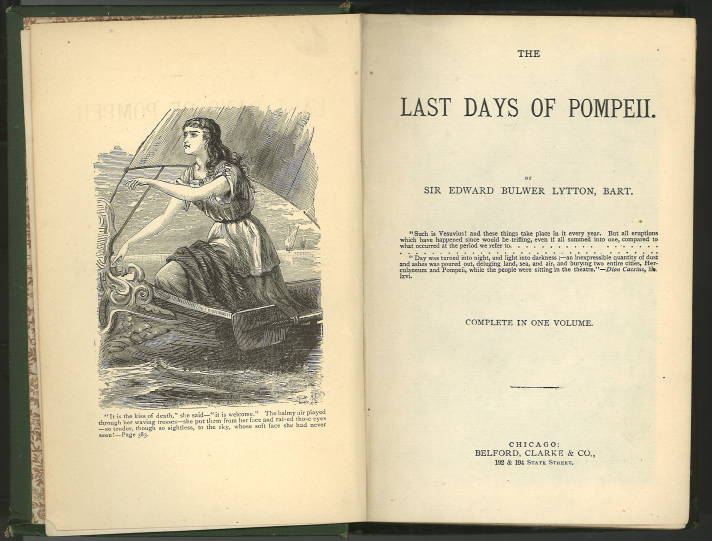
Pompeii revisited

I've been playing around with altering books lately. This is my latest effort.


(c)2011 Laura S. Packer Creative Commons License

Sunday, April 4, 2010

Storytelling excellence

Last month at Sharing the Fire: Northeast Storytelling Conference Bill Harley presented a keynote that raised worthwhile questions about storytelling as an artform. He challenged the storytelling community and storytellers as artists to strive to be better, to not settle for the label of folk art but to do the necessary work to raise storytelling to the same level as theater, dance and other fine arts. This rings resonant with my work as a producer and performer. I believe that yes, we are all storytellers, because that it is part human nature to tell stories. But as performing artists we have a responsibility to always improve our art, to work on the craft, to not just assume that the label “storyteller” makes it okay to be sloppy.

Bill Harley laid out several questions we can ask ourselves to help us become better artists. If we take ourselves and our work more seriously the world will too. In the next few weeks I’d like to look at some of these issues in detail with the hopes that it will help all storytellers of every stripe, from slammer to epic performer.

Harley has the following checklist for every performer to consider as they develop a piece (to read it in detail click here. And you should):
  • Narrative Form
  • 
Language

  • Voice and Physical Instrument
  • 
Performance Skills

  • Relationship with the Audience

  • Show Structure

  • Aesthetic

Let’s start with Narrative Form. Harley suggests every performer ask themselves the following about narrative form:
Is the structure of the piece strong – does it show an understanding of narrative structure, even if only to make it possible to experiment with that structure? Is the structure flabby – are there parts that do not belong? Is there an awareness of narrative tension? Does the piece show an understanding of character’s place in the narrative? Is there resonance in the piece, with elements introduced early bearing fruit later on? Is there an understanding of an underlying subtext in the story? Is it clear that the storyteller knows what the story is about? Has s/he made choices about what material to present to best serve the heart of the story? Is there a dramatic build that reaches some form of climax when a truth is revealed? Is this revelation presented in a way that delights or enlightens or moves the audience?  ©2009 Bill Harley

Massmouth slam judges are asked to rank three criteria, the first being narrative form. Does the story have a beginning, middle and an end? Does the story make sense? It makes sense that this is a point of judgment because in any narrative artform we long for coherence. We want motion and closure. Checkov said, "One must not put a loaded rifle on the stage if no one is thinking of firing it." The same applies to storytelling. Every element needs to be there for a reason. If you’ve practiced your piece you have a chance to cut out the narrative fat, the unnecessary elements, no matter how beloved they may be.

Storytellers have an additional burden that most narrative artists don’t have. They work in real-time with a live audience. If you don’t know what the story’s about or you lose your train of thought because you are so busy trying to tie up loose ends, the audience knows. You don’t get to rewrite, try a scene again or rewind the DVD. You must know your story, why you’re telling it and why each part is there.

Slam storytelling provides different challenges than longer form. You have very little time to create a coherent narrative, so your story must be direct. You need to know what you’re saying and why. This may be part of why slams are so effective for newer tellers – they aren’t tied up in trying to get all the little nuances in, they just want to tell the story. The short time limit means you don’t have time to worry about narrative fat.

Long form storytelling offers both more and less freedom than slam stories. While you have more time to spin out your narrative, more opportunity to weave interesting characters and explore the interstices of the story, you also have more opportunities for loose ends, more opportunity to get lost in your own love of a particular detail. You do have more time to build tension and have a satisfying ending but more room for failure. It takes work to build a successful long story. These stories in particular can fool the artist into thinking they know their own meaning. How often have you worked on a piece (anything – story, writing, art, etc) then come back to it years later to find meaning hidden that you never realized was there? This is a particular risk with long, told stories. If you find unexpected meaning in the middle of a performance, you risk violating the audience’s relationship with the story if your performance falters as you have your revelation. 

And that’s what it comes down to. Know your story. Know what matters in your story and what doesn’t matter. Tell what matters. Discard the rest. Leave your audience the white space to do the heavy lifting and trust them.

Next time I’ll look at Language and Voice and Physical Instrument. I'd love to hear your thoughts about this post!


(c)2010 Laura S. Packer Creative Commons License

Wednesday, September 16, 2009

Fine. So they make me hyperventilate. Still.

On Wednesdays I'm writing about other people's work. So far I've touched on poetry and painting, today it's music. One band in particular.

I grew up listening to classical, jazz and folk music. When Elvis died I didn't know who he was, but I could tell you if a symphony was by Mahler and which one it was within a few bars. I was a nerd. When I was ten I met Esther, who thought all this classical stuff was great, but couldn't believe I'd never heard of The Beatles. She played some of their records for me, showed me who was who (Paul was the cute one, John was the one with glasses, Ringo was the one with the big nose (sorry Ringo, we were 10) and George was the one with the eyes. I've never gotten over those eyes) and my world has never been the same. Just like it's never been the same for millions of other people.

Their music got me through every turbulent moment of my adolescence, even though they broke up years before. They sang to me, talked to me, comforted me. I can still quote most of their movies line-for-line. Sure, there were other musicians who helped me along (a CD of my stories to the first person who can name the singer of this line: I'm not a prophet or a stone age man, just a mortal with potential of a superman.) but I always came back to the boys.

I'm sure most of you know all about this and have your own Beatles love stories, your own little smiles as you think of what they meant to you. Or some other musician who played the same kind of role in your life. I'd love to hear those stories.

Let me tell you about one recent Beatles moment that still makes me grin.

I've known that Paul McCartney toured, but never wanted to pay the exorbitant prices he was asking for tickets. This year I finally broke down. Maybe it had something to do with George dying a few years ago, knowing half the Beatles are gone. Maybe it had to do with issues of my own mortality. Maybe it had to do with knowing that Paul and Ringo are much closer to my parents in age than they are to me and thinking will I have another chance to see a Beatle?

35,000 other people made the same decision. It was the best sign-along I've ever been to and one of the very best concerts. We all knew all the words to every Beatles song (at least 75% was Beatles material), many of us were playing air guitar, everyone - from the five year olds to the 85+ year olds - was dancing. No one cared if they looked foolish, everyone was happy. It was as though we each were having our own, personal relationship with Sir Paul (as we were) at the same time that we were with 34,999 of our best friends.

And I realized that's what the Beatles did and are still doing, almost 40 years after they broke up. They bring us together. They remind us of the potential of a shared dream and that we all have at least this music in common, even if our personal experiences of the music are different.

Music is powerful, it shapes us and inspires us. Neuroscience has established the music effects our brains on a grand scale (classical music especially so) and, in this case, the music of the Beatles kept me from going crazy when I was a kid. And now? The Beatles remind me of who I was and that I am the product of all my years. My current favorite Beatles song is In My Life with its love and nostalgia and sense of we have all felt this. We have all been here.

I'm still a proud nerd; I still love classical, jazz and folk. I also love a wide range of modern music in all different kinds of genres. And I will always turn up the volume on the radio when I hear the Beatles and start singing along. Care to join me?

(c) 2009 Laura S. Packer
Creative Commons License

Saturday, September 12, 2009

Seeing the world

I don't particularly like having my photo taken, but I enjoy seeing the world through the camera's eye. Here are a few of the photos I've taken in the last year or so. Some are available as notecards through zazzle along with some other things I've designed.


All images and text (c) 2009 Laura S. Packer
Creative Commons License

Wednesday, September 9, 2009

What the eye sees

I grew up in Philadephia and was lucky enough to have parents who took me to the Philadelphia Art Museum on a regular basis. I was exposed to a lot of art at a young age and, quite wonderfully, my parents didn't censor what I looked at. If I had questions they did their best to answer them. I remember giggling at nudes when I was quite young; my mother enjoys telling stories about this.

My parents gave me permission to love art. I still do. While I am not a visual artist (though I dabble in collage and assemblage) the right painting or sculpture can make me cry. Maybe it's somehow related to the mechanics of vision, the light reflecting off of the object irritating my optic nerve, but somehow? I doubt it. You know the truth.

For your viewing pleasure, a few pieces of art I love that have moved me to create.

Andrew Wyeth's work always suggests action beyond the frame. His paintings have influenced my writing and storytelling. I've written about his work at greater length here.

Love in the Afternoon, 1992

Omen, 1997

As much as Wyeth has influenced my narrative, I've discovered I have a knack for some real, physical art as well, influenced by the work of Joseph Cornell. A rabid collector and assembler, Cornell created small, unexpected worlds that bear close examination. I love his work and the sense of mystery and possibility that pervade his every piece. I think my earlier of love of Marcel Duchamp (thank you, Philadelphia Art Museum) primed me for Cornell.

Bebe Marie, early 1940s

Pharmacy, 1943

The Pink Palace, 1948

How can I not love this stuff? The implied narrative, whimsy and whiff of danger are irresistible.

When I'm feeling brave enough I'll post photos of some of my assemblage and collage pieces. In the meantime, tune in tomorrow for musings on creativity and another contest.

(c) 2009 Laura S. Packer


Creative Commons License
True Stories, Honest Lies by Laura S. Packer is licensed under a Creative Commons Attribution-Noncommercial-No Derivative Works 3.0 United States License.
Based on a work at www.truestorieshonestlies.blogspot.com.
Permissions beyond the scope of this license may be available at http://www.laurapacker.com.
Related Posts with Thumbnails