Thursday, November 24, 2011

A poem for Thursday

Bird-Understander by Craig Arnold : The Poetry Foundation

Of many reasons I love you here is one

the way you write me from the gate at the airport
so I can tell you everything will be alright

so you can tell me there is a bird
trapped in the terminal all the people
ignoring it because they do not know
what do with it except to leave it alone
until it scares itself to death

it makes you terribly terribly sad

You wish you could take the bird outside
and set it free or (failing that)
call a bird-understander
to come help the bird

All you can do is notice the bird
and feel for the bird and write
to tell me how language feels
impossibly useless

but you are wrong

You are a bird-understander
better than I could ever be
who make so many noises
and call them song

These are your own words
your way of noticing
and saying plainly
of not turning away
from hurt

you have offered them
to me I am only
giving them back

if only I could show you
how very useless
they are not
Creative Commons License

Tuesday, November 15, 2011

Creativity takes time (video)

You know it. I know it. When you are given a hard deadline and the mandate to be creative.... NOW! we get brainfreeze.

KreativMagazin put together this nice video to demonstrate that creativity takes time. I liked it and I think you will too.


(c)2011 Laura S. Packer Creative Commons License

Monday, November 14, 2011

Prompt Sunday

Here is your prompt for today. Why are Superman and the Hulk getting high? Who is in the back seat? What universe is this?


(c)2011 Laura S. Packer Creative Commons License

Sunday, November 6, 2011

Prompt Sunday

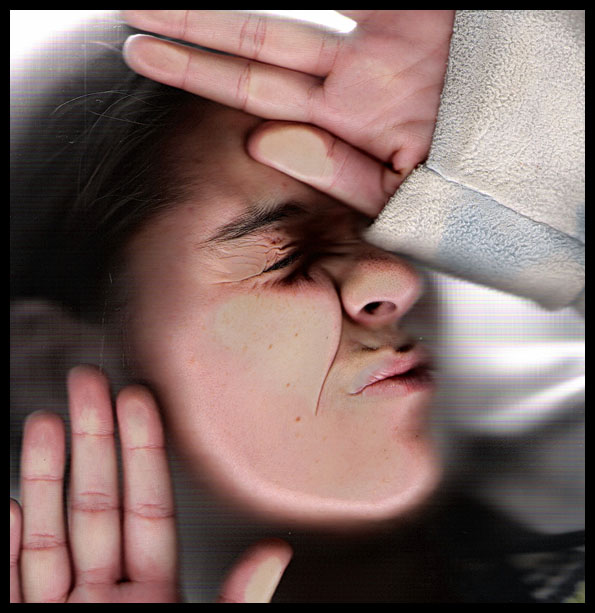
Here is your visual writing/creativity prompt for today. Who is she? Who are they? Who took this photo and what happened next? I'd love to know....


(c)2011 Laura S. Packer Creative Commons License

Thursday, November 3, 2011

Getting out of dodge

image from Kalidassa on Deviant Art
I don't know about you, but sometimes I get stuck. I get stuck in my own patterns, my own drama, my own skin. I don't always notice it as quickly as I might hope, but when I do, I panic. OH MY GOD WHAT DO I DO I'M STUCK scream all of my internal critics. They all suggest that being stuck is an eternal state and I won't be able to do anything about it.

They're wrong. There are a ton of things I can do about being stuck, things you can do too.

Some of those things are pretty simple, like talking to a friend, going for a walk, helping someone else, standing on your head, things like that. Stuff that gets you out of your own mind and out of your rut. But sometimes that isn't enough. When that happens, I get out of dodge.

I know, I'm nowhere near Dodge City, Kansas and you probably aren't either. But I get out of my current locale, I go someplace else where I can meet new people, have new experiences and be someone else or, more accurately, remember the best of who I already am. When I was younger I used to go overseas every few years and pretend to be someone else. I would tell stories about another life, the kind of life I wanted to live and create a person I hoped I might be when I got home. But I never was that person and these adventures only left me with a vague sense of longing, so now I go to other places and give myself permission to be my best self, without the baggage of the day-to-day that so easily can pull me down. I have permission to soar.

I've become more selective about where I go for these moments, so I can be both genuine and fed without any temptation to be someone else, and recently I had one of the most enriching out-of-dodge experiences of my life. I went to the PopTech conference in Camden, Maine. If you've not heard of the conference, this is how they describe themselves:

We’re a global community of innovators, working together to expand the edge of change.

When I was there I absolutely felt as though I was part of that community. I felt enhanced by possibility and moved to action.

It was three-and-a-half days of talks, conversations, excellent food and inspiration. I met people who had great ideas to change the world and acted on them.

I realized that I have every opportunity to be one of them. As a storyteller, I change the world every day when I listen to someone, when I tell a story that moves an individual or a group. What's more, I met dozens of wildly creative, intelligent people who got it when I told them I am a storyteller, who understood the broad application and possibility of story and narrative.

I felt as though I had come home to a family who had just been waiting for me to walk through the door.  By getting out of dodge I was able to remember who I am and carry it back home with me. I am energized and motivated in ways I haven't been in a long time. This trip out of dodge did everything I needed and more. I have remembered the best of who I am and am acting on it. I am so grateful that I was wise enough to go, so grateful that these experiences exist and the community welcomed me.

All of this begs the question: Why don't I give myself permission to soar all the time? Why do I have to get out of dodge to be my best self? The easy answer is about the daily grind, the commute, the bills, the things that wear me down. But the better answer, one I think you and the PopTech community will understand is much simpler.

I have permission to soar all the time. I just need to remember that I have wings.

(c)2011 Laura S. Packer Creative Commons License

Sunday, October 30, 2011

Prompt Sunday


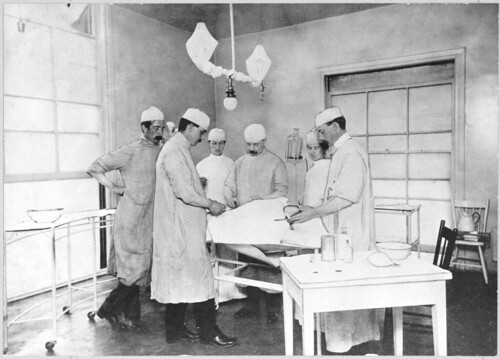
Starting today, I'm going to start posting a picture every Sunday. These are pictures that amuse or intrigue me and might, I hope, spark inspiration.

Let me know what you think, what you imagine in response to these images.

Vancouver General Hospital remembers 100 years: Surgery, 1905 by Vancouver Coastal Health
Vancouver General Hospital remembers 100 years: Surgery, 1905, a photo by Vancouver Coastal Health on Flickr.

Creative Commons License

Thursday, October 27, 2011

On birthdays and blessings

Today is my birthday. I have taken to writing a list on this day every year to celebrate the things in the world I most cherish, the things that help me understand my place and role, the things that simply make my heart soar. If you're interested in previous lists just go to other Octobers on this blog, you'll find them there.

I am so grateful to be in this beautiful, perfectly broken, transcendent world. And I am grateful for:
  1. Each breath.
  2. My lungs and heart and body.
  3. My senses.
  4. Luscious tastes.
  5. Colors and patterns.
  6. The world rushing by my ears.
  7. And even the persistent whine of tinnitus, that reminds me that I am alive.
  8. The scents that waft by, noticed and ignored.
  9. The touch of my lover's hand, the rasp of my clothing on skin, the breeze on my cheek.
  10. The beloved people in my life, known and unknown.
  11. My family.
  12. My chosen family.
  13. My dear, dear friends.
  14. And those who wander further from me, my co-workers and those I see in passing.
  15. And the strangers I will never know who each have their own complexities, dreams and birthdays.
  16. Story
  17. Art
  18. Music
  19. And the wisdom to occasionally remember that these things feed me as much as any food.
  20. Work. Not merely a job in these tight times, but the work of my hands and my heart.
  21. Craft, the labor to make something good.
  22. The places books take me to.
  23. The joy of discovery. "Oh yes!"
  24. And sharing that discovery. "Oh yes, and..."
  25. My mind. And the range of emotions.
  26. And the minds of others.
  27. The resilience of my body.
  28. The gifts of age.
  29. Wonder.
  30. Disagreement.
  31. Problems to be solved.
  32. And mysteries to ponder.
  33. The places I will never go.
  34. Wildness.
  35. Water.
  36. Wagging dogs.
  37. Language.
  38. Singing, even if others may not appreciate my voice.
  39. Laughing until my stomach hurts.
  40. Good food.
  41. Change. The passage of time and the knowledge that things will change.
  42. Silence.
  43. Unexpected beauty.
  44. And this life. This singular, glorious life.
Any others? 44 seems like such a short list.

I wanted to end with this picture and the reminder that, no matter how tired, frustrated or fed up we are at any one point in our lives, things will change, whether or not we want them to. We can influence most of those changes and, even if we can't, we can moderate our own responses. The person I was at 12 didn't yet know about the smell of the air in Tuscany, the joy of listening to a new storyteller, that persistence pays off. I feel so tender when I look at her, wishing I could tell her that things will get better. Someday I'll look back at the person I am now, at 44, and marvel at what I didn't yet know.

Oh, and let me add - the cat's name was Taffy. She lived to 18 and was a great friend.

(c)2011 Laura S. Packer Creative Commons License

Thursday, October 13, 2011

Storytelling in a suit: the art and craft of business storytelling


I wrote this article for the Connecticut Storytelling Center's newsletter, HearSay. It's a great publication with all kinds of useful resources. I thought you might find it of interest, so am sharing it with you here. I hope you find it interesting. If you're interested in other storytelling articles, click here. As always, please contact me for reprinting permission.

Human beings are storytelling creatures. From our earliest hunter-gatherer days we have used story to explain and understand ourselves and our world. This is true of organizations as well. The stories organizations tell about themselves (branding, marketing, vision and mission) are how they wish to be seen externally. The stories they tell internally (newsletters, intranets, gossip, employee chatter) are how the organization sees itself. The stories they tell themselves about their customers shape the products they make and the services they offer. None of this is a surprise, of course, since organizations are created and maintained by humans, the storytelling animal.

I’ve always been fascinated by the intersection of business and art, and for the past ten years I’ve worked as an organizational storytelling practitioner helping companies and their employees tell their stories. In the course of this work, I’ve heard a huge range of stories and seen how story helped companies find their voice, solve internal problems, develop new products, expand, grow into better places to work and become better global citizens.

Organizational storytelling is quite different from our usual model of storytelling and yet surprisingly similar.  As storytellers know, when you “story” something, you give it life and depth and meaning. This is true in organizations, as well. Storying a company, a process or a product humanizes it – in a way that a memo or spreadsheet does not – and thus extends ownership throughout the organization or community. The story itself actually becomes a deliverable, a product, alive and vital to the audience, whoever they may be.

But it’s not always a simple process.

Organizational storytelling requires a lot of homework. First, how does the client want to use story? To sell an existing product or service or to design something new? To raise more funds? To attract better talent or further engage their employees? To clarify or develop a mission statement? The practitioner must have an understanding of their client’s stated needs, as well as a toolkit for new needs that may arise.

For example, I was hired by a large agricultural advocacy group to help them develop a new mission for the 21st century so they could grow their membership and attract more funding. They were interested in collecting stories from the farmers and educators within the organization, as well as from other company stakeholders, including board members, marketing personnel and administrators. My client also told me that each invested group thought that their own story should be the focus of the mission, to the exclusion of the others. In short, I was being asked to re-story an organization that had become highly factionalized.

I spent the weeks prior to my first meeting with the group learning as much as I could about their sector of agriculture, about their history and competing organizations. I also sent questionnaires to the workshop participants, and from these I learned essential information about the organization, preliminary stories and a sense of internal themes. I also learned that most of the participants thought storytelling was useless and the event was likely to be a waste of time and money.

On my first day, I wore my suit so everyone would know I took them and their work seriously. When I arrived in the meeting room, each faction sat separately from the other. Arms were crossed. Faces were closed. I began by establishing my credentials: about business, about their business in particular and about storytelling. We introduced ourselves, discussed expectations and set the ground rules – listening skills, honesty, open-mindedness. I talked about how story works and its importance in business. Then I asked them to tell each other stories.

We started with success stories: Tell a story about something you are proud of in your work. Or, tell about a specific time when the work you did had an impact on an individual. From successes, we were able to move to frustrations: Tell a story about a time when you felt hindered in your job.  Finally, they felt safe enough to talk about experiences they perceived as failures. As they told these stories the different factions began to realize that they all were telling very similar stories, with similar themes, that reflected similar values.

Over the course of three days, all the participants told their stories, in small groups and to the whole room. Farmers were talking to educators were talking to other stakeholders. Slowly, they began to distill the values of the organization as it is now (not as it had been) and they came to see the utility of storytelling and listening. By the end of the session we had developed a set of stories that every stakeholder could use, a new set of corporate values derived from those stories and a new mission statement.

They also discovered tools to help identify new talent whose values were aligned with their own and realized the importance to the organization’s growth of hiring people with skills beyond the agricultural realm – that is, to bring in new ideas and new stories. And now they had the skills for listening and collecting those stories.

The board chair told me later that she had been quite skeptical about storytelling as a tool for their organization, "But," she said, “You got us. You understood us.” Because I had learned as much as I could about agriculture and their specific history, I could speak their language, listen for useful motifs and navigate their politics. Had I not done my homework, I would not have been able to help.

When an organization decides to build a storytelling practice, it commits itself to greater authenticity and engagement. Externally, a storytelling organization is better able to articulate its value, regardless of its service or product. Think about your favorite brand. Why do you love it? What stories does it tell? Apple tells stories of good design and human connection. Chrysler recently started telling a new version of the American story with its Imported from Detroit advertising campaign. The Red Cross is there in times of need. Each of these stories somehow resonates with an aspect of being human, some story we wish to tell about ourselves or our community: technology so simple your grandmother gets it yet you still look cool while using it; strength and patriotism; helping and being helped. What’s more, each of these companies tells these stories as personal experiences – someone specific using their product or services.

Internally, a storytelling organization is a listening organization. They listen to their employees’ stories so they can help them become more engaged in their work. For example, I was asked to help a division of a government agency understand why much of their work force had low morale. Because I was a neutral observer, employees were much more forthcoming with me than they would have been otherwise and it quickly became clear that the style of management and conversation was one based on volume, not quality, of ideas. During several listening-based story workshops I lead, the leaders were able to develop new styles of managing while the less assertive employees began to speak up. Employee engagement and retention rose significantly.

A leader who uses story authentically and listens to their employees’ stories can’t help but connect more effectively to everyone they contact in the organization. It becomes harder to make thoughtless management decisions and, as a more positive work environment builds, the organization flourishes.

Storytelling is a broad and flexible tool that can be used successfully in any organization and it gives storytellers a chance to extend the impact of our work. Whether we listen to stakeholders to identify new values, problems or directions; coach a leader to be a better speaker and listener; develop story to communicate how a product or service will or could be used; or help build organizational cohesiveness, storytellers help businesses remember their roots – that they are composed of people, and people, each and every one of us, are composed of story.

(c)2011 Laura S. Packer Creative Commons License

Tuesday, October 11, 2011

We live in a generation of autobiography...

A lovely look at autobiographical travelogue by Lucy Knisley. Worth looking at for any personal storyteller, regardless of medium, particularly the first 10 minutes.

"it's worth knowing you have an audience to share it with, it makes for more responsible work."

"it's important to recognize events in your life, even if they're small and transitional...they help us understand ourselves better."

"journaling is a way to collect your scattered and confused thoughts."


Life is the Story from Lucy Knisley on Vimeo.


(c)2011 Laura S. Packer Creative Commons License

Saturday, October 1, 2011

The visible world

I've lately been taking photographs every day, printing them and pasting them in my journal. I've found I often don't want to write about my life, but I still want to record it, so this seems like a reasonable compromise. I thought I would start sharing some of them with you. None are staged, all are exactly as I found them.

Some of these images act as writing prompts, others simply remind me of where I've been and what I've seen. I'm giving them to you without context, so you can dream them into your own worlds.


(c)2011 Laura S. Packer Creative Commons License
True Stories, Honest Lies by Laura S. Packer is licensed under a Creative Commons Attribution-Noncommercial-No Derivative Works 3.0 United States License.
Based on a work at www.truestorieshonestlies.blogspot.com.
Permissions beyond the scope of this license may be available at http://www.laurapacker.com.
Related Posts with Thumbnails