Monday, July 15, 2013

Searching for white space

I'm on a writing retreat this week, so am posting an old blog post for your reading pleasure. While I'm away I'll be largely offline, recuperating and regrouping. I'll be surrounded by white space. I'd love to know how you find white space in your life.

Originally published in June 2012.

In the last six weeks I've had only one day without any kind of obligations. This isn't sustainable and so, unsurprisingly, I now have a summer cold. It's foolish of me to push this hard and think I can get away with it. More than that, it's foolish of me to think I can be creative without any time in which to create. How can I create without white space?

I have become a believer in whitespace, in both its necessity and fragility. I began thinking about this in earnest following PopTech 2011, when I listened to a speaker discuss the importance of white space for a creative life. As I listened I found myself weeping, feeling a deep yearning for more white space. Since then I've tried and failed and tried again to create a life rich in white space which may lead to a life rich in creativity.

But what is white space? At its most basic, white space is the portion of the page left unmarked, the space between words, images and other representations. It isn't nothing because it is both the space in which the objects exist and a balancing force. I've written before about the need for white space in storytelling, how the storyteller must leave room for the audience, white space in which the audience can create their own version of the story. Without white space the storytelling experience is, at best, stilted.

So why do I need white space in my life? It might be easier to think of it graphically. Compare the graphic up above with this one.
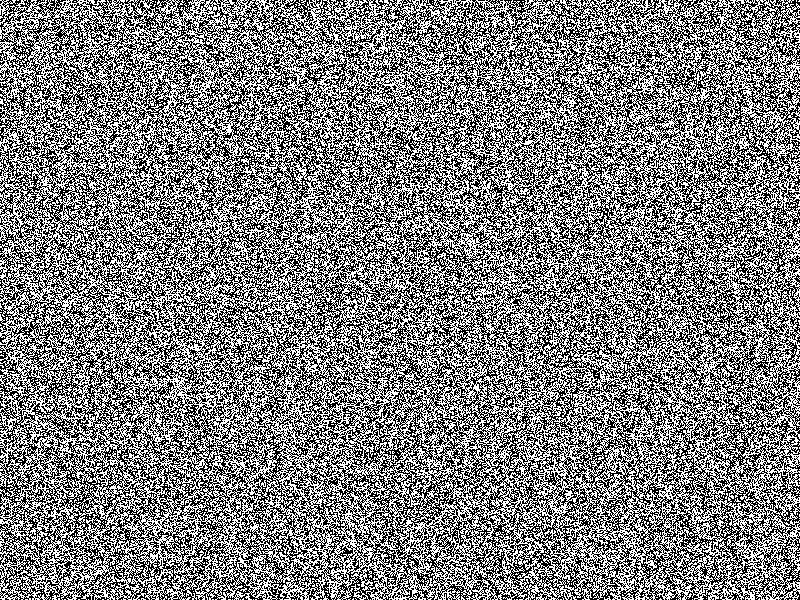
In one, there is room. There is room for imagination to grow, play, rest, explore. I can add color or just enjoy the serenity of the moment. In this other, I am lost. There is no room. No room for color, for exploration for anything other than that which is most immediate and pressing. (I know, someone could easily make some snarky comments about imagining things in the static. If it makes you happy, go ahead, but I expect most of you know what I mean.)

So what do I do? Right now, I'm finding bits of white space where I can. I'm driving without the radio on. I try and get outside every day. On Friday, I leave for a week in the Adirondacks, where I will have ample white and green space, though I know a week isn't enough to nourish me for a year. It at least gives me a chance to reset and ponder new strategies.

And I ask you, what do you do for white space? How do you find it? How do you nurture it in your life? Let's see if we can find a way to create a white space rest stop in our busy lives and, for just a moment, see what might emerge.

(c)2012 Laura S. Packer Creative Commons License

Wednesday, July 10, 2013

Story Quote: Chariots

“Telling the proper stories is as if you were approaching the throne of Heaven in a fiery chariot.”

—Baal Shem Tov

(c)2011 Laura S. Packer Creative Commons License

Tuesday, July 9, 2013

Kansas City: the small things

It's been almost seven months now, which seems amazing. Almost seven months since Kevin and I packed up our life in Boston and began reconstituting here in Kansas City, Missouri. It was the right choice. It was the hard choice. Every day is a new adventure.

It puts me in mind of the millions of people who left their homes for new lands, knowing they never would go home again, that the most they could hope for was a long-delayed letter. How lucky we are to live in this age of electrons and airplanes.

I'm working on a piece about what all of this feels like, but I'm finding it challenging writing, so it will go up another time.

For now, I wanted to share some of the small wonders I've found here. I am a fan of small wonders. Kansas City is a pretty amazing place and I thought you might like to see some of the details. In the next few weeks I'll post some broader views.

Let's start with where we are, in case there are any doubts. I found this on the step of an old warehouse. KC is rich in old warehouses.


I'm not the only one who enjoys looking around Kansas City.

Who would have thought this would be here?

And if you need a rest, there are secret gardens. This is my favorite. 

I have found wonders within and without.


And, barring bad weather, I can always go to my own back yard for succor.


(c) 2013 Laura Packer
Creative Commons License

Sunday, July 7, 2013

Addiction

Everyone has one, likely more than one. I'm not talking about the big ones - you know, booze or tobacco or drugs or sex or gambling - but the little addictions. 

I've just got to have my morning cup of coffee.
If I didn't go to the gym every day then I don't know what I'd do with myself. 
Leave me alone, I'm reading the paper.
I don't feel like myself if I don't put on my face.
I can't wait for the next season of X to start. In the meantime, I'm rewatching it again on Netflix.
Hang on, let me finish this game. 

I'm not saying the little addictions are inevitably bad, I'm just saying it's helpful to know they are there, so we can accommodate them. Support them. Understand why we might feel a bit off if we don't get to them. Make a decision about what to do, to yield or get help.

Me? I have plenty of addictions. Some are private. Others, like hot showers and baths or writing or tea are more visible. The little ones are easy to indulge. It's the big ones that get scary, that I try to overlook and pretend aren't there. Those are the ones I imagine don't have power over me.

It's like that sometimes. 

When I lived in Boston, my life was rich with performance. I could tell stories weekly if I wanted to, even more often. Audiences were everywhere. Getting up on stage (or what passed for a stage) was my drug. The trembling anticipation. The beating of my heart. That first deep breath and the rush as the story began to flow out of me, the audience leaning forward, the connection. 

It's a visceral jolt. 

After almost every performance I would feel balanced. Centered. Sure of my place in the world. It was as though the concentrated attention of my audience fed something in me, that the act of giving them story gave me something, too.

It all sounds a little seedy here, but if you are a performer, then you know what I'm talking about. It doesn't matter if you work with kids or adults, there is something about that time on stage that feeds you. I imagine everyone feels it, be they preacher, dancer, storyteller, actor or newscaster. You go somewhere inside, someplace hidden, and reveal yourself. The fear switches over to something else and it. feels. good. It is my drug. If you look inside, if you’re honest, you know what I mean.

Since moving to Kansas City I've had far fewer performance opportunities. The spoken word community here is less dense and more poetry specific, so I’m working my way into it, finding and creating the opportunities I crave. I’ve performed maybe every month or so since arriving, and then it’s only been short pieces in open mics or in the class I’m teaching. These have been good stories, fun, with responsive audiences, but it’s infrequent. I hadn’t realized I’ve been in withdrawal. What I had noticed over the last few weeks is that I’ve been kind of blue. A little listless. Antsy. Plucking at my mental clothing for something to do, for the right thing to do, for the thing that will make me feel whole, all the while not realizing it’s my drug I’m craving. The audience. The connection. The visceral jolt.

It’s like that sometimes.

A few days ago I was one of many performers standing on a street corner pitching my show for the Kansas City Fringe Festival. I felt so good, enjoyed every moment so much, it was such a familiar and welcome feeling. It hit me like a ton of bricks, like that first drink Oh god, I’ve missed this. The feeling has lingered, my mood lifted, hope restored. And that’s when it hit me. I’m an addict. I needed the audience, the connection, the moment, the visceral jolt. 

And now I find myself wondering where I’ll get my next hit. Wondering what happens if I don’t find the stage soon enough. Is there a support group I should be looking for? I don’t know. My name is Laura, I’m a storyteller. I need the dance, the sway between audience and tale. And if it’s not there, well…


It’s like that sometimes. 

(c)2013 Laura S. Packer Creative Commons License

Wednesday, July 3, 2013

Story Quote: Once Upon a Time...

“‘Thou shalt not’ is soon forgotten, but ‘Once upon a time’ lasts forever.”
—Philip Pullman
(1996 Carnegie Medal acceptance speech)

(c)2013 Laura S. Packer Creative Commons License

Wednesday, June 26, 2013

Story Quote: Avoiding madness

We create stories to define our existence. If we do not create the stories, we probably go mad."

- Shekhar Kapur, from his TED talk, We Are The Stories We Tell Ourselves.

(c)2013 Laura S. Packer Creative Commons License

Monday, June 24, 2013

Video: Ze Frank asks us, what are we doing with each of our days.

Life visualized in jelly beans. Maybe that's why President Reagan kept them on his desk. Maybe we all need to keep some kind of reminder on our desks. In our cars. Beside the mirror.


(c)2013 Laura S. Packer Creative Commons License

Thursday, June 20, 2013

Some thoughts on tv storytelling, James Gandolfini and why we love the ordinary villain

Not so long ago (but well before the advent of Hulu, Netflix or decent content on YouTube) I was one of the people who quite proudly proclaimed, "I don't watch television." This wasn't really true. I didn't own a tv, but I'd sneak a Simpsons episode here and there, watch Star Trek at a friend's house, you know, the standard behavior of a reformed addict. But I didn't really miss it, nor did I feel a need to watch tv regularly. It wasn't well written, it wan't compelling, it didn't tell a story I found engaging.

All of that changed with The Sopranos. I missed the first season, but by the middle of the second, I found myself thoroughly enmeshed in the trials and tribulations of the Soprano family. I kept telling myself it was just another soap opera, that my addiction didn't make any sense, but what I came to realize was this: 1) it was a really well-written soap opera, 2) the acting was superb, I could believe everyone and 3) soap operas matter to us because they tell such human stories.

At its core, The Sopranos was the story of a man trying to do right by his family, do his job, find a place in his community, all while being deeply flawed. Who among us hasn't tried to do right while being deeply flawed?

After The Sopranos, television began to change. We are now in a new golden age of tv storytelling, with many shows where story and writing really matters. You may argue with me, that there was great tv before The Sopranos, that's fine. For me, that one show was the tipping point. Before there was very little I found deeply compelling, certainly nothing that didn't also include lasers, space and maybe a giant lizard or two. Now I have to choose between riches. It's as though The Sopranos helped audiences realize we could actually consume things that weren't bad for us, there was more than junk food and the occasional laser-enhanced apple. Where before the best written show I could find was Babylon 5 (which was often spectacular and, if nothing else, had great special effects), now I am offered good writing not only in sci-fi but right here on earth. Television producers have realized that good storytelling matters. That the audience's intelligence matters. That believability matters.

Which brings me to the quality of acting we now find on tv. The Sopranos raised the bar not only for writing/filming/directing, but acting. By casting James Gandolfini, Edie Falco and others, the producers were putting a stake in the ground, stating they wanted their characters to have all the visible unspoken nuances of any living person. That takes real acting chops.

James Gandolfini made Tony Soprano more than just a standard mafia don. His acting skill brought a very human complexity to the part. The writing opened the door, but his acting meant we were able to step into Tony's shoes. We could empathize with his love of eating leftovers from the fridge because of the delight on his face as he snuck that bite of lasagna. We felt his frustration with and love for his kids. Our hearts broke as he yearned to be a good husband but didn't quite know how.

None of this would have been possible without Mr. Gandolfini's skill as an actor and the opportunity he was given by such superb scripts. Just watch this clip from the very end of The Sopranos (really the end, the end of the last episode ever). Watch the play of emotions on his face as he observes everyone coming in. Watch his hope and frustration with his son. The ordinary conversation with his wife. The very mundanity of it all makes it real and makes it ours.


That we could identify so closely with Tony Soprano means we were able to have morally ambiguous feelings when he erupted into a murderous rage. We liked Tony. We understood so much about him. Did this mean we understood his dark side as well?

Ordinary villains, well-portrayed, allow us to connect to our own darker yearnings. We all have those stray uncomfortable thoughts. By empathizing with fictional characters, ordinary villains, we can live those thoughts out, just a little, without feeling too much guilt. Truly evil villains are too repugnant for most of us to want to identify with; we need to feel sympathy for the devil to get that fictional release. We all want to be bad, but we all also want to be loved. Tony Soprano let us experience that. James Gandolfini made it possible.

Since The Sopranos, there have been many other superb tv shows, well-written, well-acted, well-produced. Good storytelling, no matter the format or topic, gives us a doorway into our own lives, a chance to reflect and identify that we might not have otherwise have had. Yes, this is wildly different from live storytelling, but there is still value here that I didn't admit to before The Sopranos.

I now own a tv. I'm hooked on a couple of shows. And I'm grateful for the life and talent of people like James Gandolfini, who open that door and say, "Look. Here you are. Here we all are."

P.S. What are you watching? What do you consider good tv storytelling? I'd love to know.

(c)2013 Laura S. Packer Creative Commons License

Sunday, June 16, 2013

Happy Bloomsday, Happy Father's Day

Today has the happy coincidence of being both Bloomsday and Father's Day.

Bloomsday honors the day the novel Ulysses, by James Joyce, takes place. It celebrates the life of the author, love, literature and the potential of the written word. Ulysses is one of my desert island books and I encourage you to take a year or two to read it. Every Bloomsday I take the time to reread a random passage and Molly Bloom's soliloquy, which closes the book. I've included it below. For me it encapsulates a couple of very important things about the world. When you read it, read it aloud. It will make more sense this way. And yes, the picture is of my arm.

Today is also Father's Day, so I'd like to take a moment to honor a few fathers who matter to me.

First and foremost, my own father, Harvey Packer. My father taught me to love language and the stars, that silence is of great value, that crying at music makes sense, that the world is full of great pain and beauty. Thank you, Dad.

Second, Brother Blue. I've written about Brother Blue elsewhere. Brother Blue taught me that listening is paramount, that story matters and that kindness always, always makes a difference. Thank you, Blue. I miss you everyday.

Third, Kevin Brooks. The love of my life, the father of my step-children, the man who teaches me daily that the world is full of enormous possibility. Thank you, Kevin.

And lastly the many men who have fathered different parts of my life and the lives of those I love. Thank you for your humor, your patience, your unexpected gifts.

(c)2013 Laura S. Packer

Molly Bloom's Soliloquy

…I love flowers I’d love to have the whole place swimming in roses God of heaven there’s nothing like nature the wild mountains then the sea and the waves rushing then the beautiful country with fields of oats and wheat and all kinds of things and all the fine cattle going about that would do your heart good to see rivers and lakes and flowers all sorts of shapes and smells and colours springing up even out of the ditches primroses and violets nature it is as for them saying there’s no God I wouldn’t give a snap of my two fingers for all their learning why don’t they go and create something I often asked him atheists or whatever they call themselves go and wash the cobbles off themselves first then they go howling for the priest and they dying and why why because they’re afraid of hell on account of their bad conscience ah yes I know them well who was the first person in the universe before there was anybody that made it all who ah that they don’t know neither do I so there you are they might as well try to stop the sun from rising tomorrow the sun shines for you he said the day we were lying among the rhododendrons on Howth head in the grey tweed suit and his straw hat the day I got him to propose to me yes first I gave him the bit of seedcake out of my mouth and it was leapyear like now yes 16 years ago my God after that long kiss I near lost my breath yes he said was a flower of the mountain yes so we are flowers all a woman’s body yes that was one true thing he said in his life and the sun shines for you today yes that was why I liked him because I saw he understood or felt what a woman is and I knew I could always get round him and I gave him all the pleasure I could leading him on till he asked me to say yes and I wouldn’t answer first only looked out over the sea and the sky I was thinking of so many things he didn’t know of Mulvey and Mr Stanhope and Hester and father and old captain Groves and the sailors playing all birds fly and I say stoop and washing up dishes they called it on the pier and the sentry in front of the governors house with the thing round his white helmet poor devil half roasted and the Spanish girls laughing in their shawls and their tall combs and the auctions in the morning the Greeks and the Jews and the Arabs and the devil knows who else from all the ends of Europe and Duke street and the fowl market all clucking outside Larby Sharans and the poor donkeys slipping half asleep and the vague fellows in the cloaks asleep in the shade on the steps and the big wheels of the carts of the bulls and the old castle thousands of years old yes and those handsome Moors all in white and turbans like kings asking you to sit down in their little bit of a shop and Ronda with the old windows of the posadas glancing eyes a lattice hid for her lover to kiss the iron and the wineshops half open at night and the castanets and the night we missed the boat at Algeciras the watchman going about serene with his lamp and O that awful deepdown torrent O and the sea the sea crimson sometimes like fire and the glorious sunsets and the figtrees in the Alameda gardens yes and all the queer little streets and pink and blue and yellow houses and the rosegardens and the jessamine and geraniums and cactuses and Gibraltar as a girl where I was a Flower of the mountain yes when I put the rose in my hair like the Andalusian girls used or shall I wear a red yes and how he kissed me under the Moorish wall and I thought well as well him as another and then I asked him with my eyes to ask again yes and then he asked me would I yes to say yes my mountain flower and first I put my arms around him yes and drew him down Jo me so he could feel my breasts all perfume yes and his heart was going like mad and yes I said yes I will Yes. Creative Commons License

Sunday, June 9, 2013

Storytelling Alphabet, Q through Z.

As you know, I decided to blog a storytelling alphabet in May. I've posted summaries here (A-E), here (F-J) and here (K-P). This is the last summary. I hope you've found this useful and interesting. I'd love any feedback you'd care to share. I'm going to expand this into a book and am looking for other topics, things you'd really like to see. Thanks!

These summaries are quite short, since there are so many in this post. Please click on the links for thoughts and more information.

Q is for Quiet. Some thoughts on what we need in our creative process. I need quiet. What do you need?

R is for Research. Do your research for every story you tell. Whether fiction, fairy tale or fact, make sure the verifiable parts are fact-checked so, if you choose to deviate from the agreed-upon truth, you know what you're doing and why. A variety of good research sites are listed.

S is for Scary. Tips and tricks for telling scary stories. Make sure you find the story chilling, as well as some hints for more effective telling.

S is also for Storytelling. Some thoughts on why organizations need storytelling.

T is for Triangle. Performance storytelling is actually all about mediating a set of relationships between teller, tale and audience. An exploration of the storytelling triangle, how it works and how you can use it.

U is for Uncomfortable. Growth is uncomfortable. We need to be willing to try new, uncomfortable things to learn more about ourselves and our craft.

V is for Voice. A storyteller's voice is her instrument. Some thoughts about how to most effectively use your voice.

W is for wx5+1. A little math for story structure and development. Good stories answer who/what/where/when/why/how.

X is for X the Unknown. Every storytelling performance will have unknown elements. The weather could change, the world can change, your audience might all have food poisoning. Some thoughts on how to cope with the unknown.

Y is for Yes, and... Improv and flexibility is vitally important for every storyteller. Some thoughts on accepting all ideas and circumstances.

Z is for Zowie plus an announcement. Some thoughts on blogging the alphabet, the fun of being a storyteller and announcing the storytelling abc book.

(c) 2013 Laura Packer Creative Commons License
True Stories, Honest Lies by Laura S. Packer is licensed under a Creative Commons Attribution-Noncommercial-No Derivative Works 3.0 United States License.
Based on a work at www.truestorieshonestlies.blogspot.com.
Permissions beyond the scope of this license may be available at http://www.laurapacker.com.
Related Posts with Thumbnails